Blog/ Healthcare technology

Why we need managers who master AI
Bringing artificial intelligence into business administration education has become imperative to prepare managers capable of leading complex organizations, especially hospitals, in a landscape driven by data, automation and technology governance
- By
- Artur GiovanellaNurse auditor, data systems specialist and product manager at Rivio
- Published
- Reading time
- 5 minutes
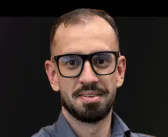


Some time ago, artificial intelligence left the realm of science fiction and began to directly affect work in many segments, including hospitals. It is present in diagnostics, logistics, billing, medical coding, strategic decision-making in hospitals, the automation of administrative routines and other areas.
So the question arises: are business schools ready to train managers who do not just know about AI, but who think and act by integrating it into their daily work?
This article argues that undergraduate business administration programs should adapt their curricula as soon as possible, offering an education that combines solid management fundamentals with emerging AI‑related skills.
That is the view of professors and managers who are already aligned with this vision. Not least because it is necessary to understand how all this connects directly to modern hospital management, a segment in which applying AI is no longer optional but a strategic necessity.
Why the business administration curriculum needs to change
There are many reasons for undergraduate programs to urgently update what they teach in the classroom. Here are some of them:
-
A shift in what the market wants
Companies (including hospitals and healthcare services) expect managers who not only understand finance, logistics, people and strategy, but who can also interpret data, use AI to forecast scenarios, automate processes and optimize resources. Those who train managers without these skills will be producing unprepared professionals.
-
A differentiating skill
Knowing how to apply AI, even at a basic level, by interpreting algorithms and understanding data ethics, security, integrity and privacy, becomes a competitive advantage. In many organizations this is already a requirement, or soon will be. -
Ethical and regulatory challenges
AI brings opportunities, but also risks, such as biased algorithms, indiscriminate use of personal data, automation failures and social impact. Professors and managers who master these aspects, even minimally, will be able to train a more responsible generation focused on business sustainability. -
Interdisciplinary integration
Managing with AI requires dialogue among administration, statistics, data science, information technology and ethics. A well-adapted curriculum needs to encourage this interdisciplinarity.
Testimonials and practical examples
Although many institutions are still at the beginning of this process, there are already voices and practices pointing the way. One example is the Federal University of Santa Catarina (UFSC), where professor Alexandre Moraes Ramos gave the talk Artificial Intelligence in University Management, highlighting how AI can transform university management by optimizing processes, raising the quality of services and expanding institutional policies for the ethical use of AI.
At Centro Universitário do Rio Grande do Norte (UNI-RN), during the Faculty Integration Seminar, professor Leonardo Medeiros stressed that “AI will not replace the teacher, but it can be an ally. Start testing, learn from your mistakes, adapt your practices.”
At Unifametro, an AI training program for managers indicated that up to 80% of administrative tasks can be optimized with AI, and that companies that integrate it into strategic decisions tend to increase productivity substantially.
A 2023 survey by Anahp (National Association of Private Hospitals), in partnership with ABSS (Brazilian Association of Health Startups), reveals that more than 60% of Brazilian private hospitals already use AI in some way in clinical, administrative or operational processes — chatbots, clinical decision support, medical image analysis, information security.
Hospital management: the future is already here
Hospital management shows why managers trained only in traditional models may feel overwhelmed. After all, hospitals are complex organizations, with multiple workflows, clinical risks, regulatory requirements and pressure for efficiency, quality of care and financial sustainability.
Some examples of how AI is already present in healthcare:
-
Practical initiatives in public hospitals: the Hospital das Clínicas of the Federal University of Pernambuco (UFPE), part of the Ebserh network, has developed 12 AI projects, ranging from queue prioritization and skin cancer detection to digital pathology, instrument inspection, internal auditing and more.
-
Quality of clinical information: initiatives such as DoctorAssistant.ai and iHealth automate medical documentation and suggest hospital codes (as in the DRG model), leading to significant improvements in clinical information quality indices.
-
Hospital infrastructure + operational automation: private hospitals have invested not only in visible solutions (the “clinical front”), but also behind the scenes — inventory automation, security, failure detection in critical systems, bed optimization, demand forecasting.
Business administration programs that do not adapt their curricula to include AI-related skills will run a serious risk of training managers with a relevance gap, that is, managers who will not be ready for the efficiency, innovation and ethics challenges the market, especially the healthcare market, demands.
For hospital management, this gap is especially critical: treating patients with quality, innovating in care, dealing with regulation and compliance, staying financially viable — all of this requires a digital mindset, data, automation and predictability. In short, it requires managers who see AI not as an optional tool, but as a central part of strategy.
Rivio and its role in healthcare
Rivio fits into this landscape of collaboration between technology, hospital management and operational efficiency. As a company focused on revenue cycle optimization in healthcare, Rivio helps hospitals take care of the entire billing process (coding, auditing, credentialing, collections and so on) so that managers can focus on what really matters: the quality of the services offered, patient safety and clinical and operational efficiency, instead of getting lost in the bureaucratic mazes of billing and revenue.
At hospitals that work with Rivio, part of the “noise” of uncertainty about whether every billing step is correct, or whether there are preventable losses, disappears. This frees up energy, time and resources for investment in care, innovation and humanization — precisely the aspects a manager trained with a modern view of AI should prioritize.
__________________________
Artur Giovanella holds degrees in Nursing and in Information Systems, both from Universidade Católica de Santa Catarina, and is one of the pioneers in Brazil in using technology to transform hospital processes. See Artur’s profile at Rivio.