
About us
Rivio runs what the hospital should never have had to run.
Scroll to explore


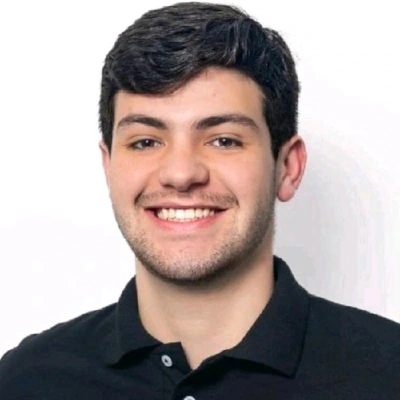

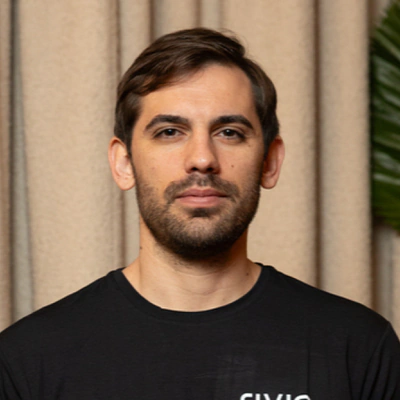

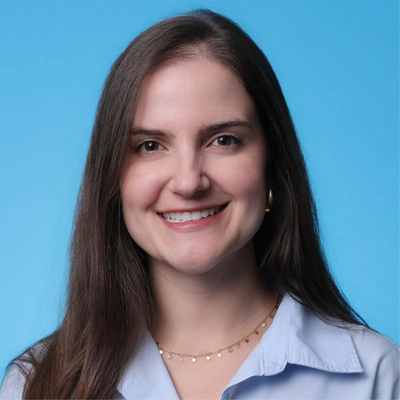

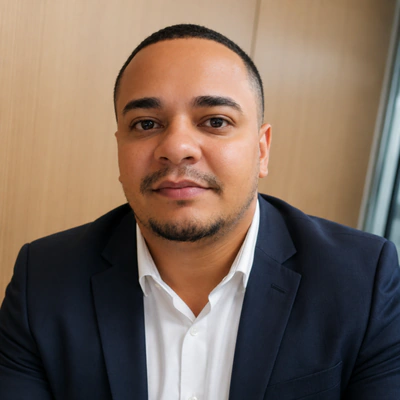
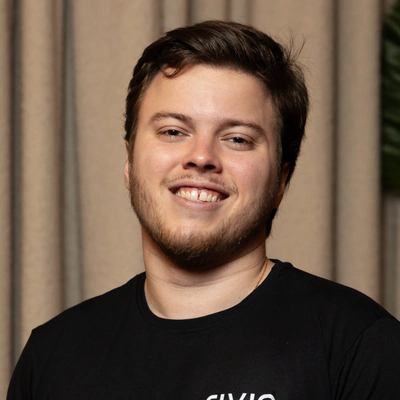

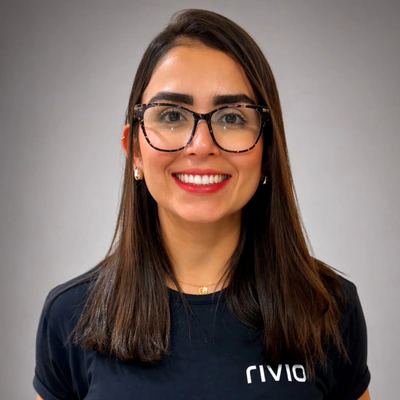
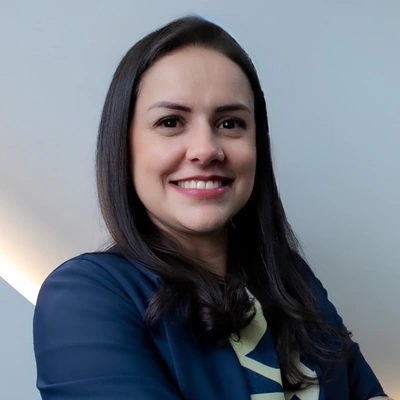
We are engineers, nurse auditors, billing specialists and data scientists building the operational intelligence layer Brazilian hospitals never had.

Brazilian healthcare doesn’t have an effort problem. It has an architecture problem.
Why we exist
A mid-sized hospital in Brazil carries more operational complexity than a bank. Dozens of health plans, each with its own rules. Contracts that change. Price tables that contradict each other. Thousands of claims a month, and every one of them depends on clinical evidence stored in another system, in another format, under someone else’s responsibility.
Almost no hospital was built to handle this. None of it is a lack of competence. Hospital teams are among the most dedicated we have ever seen at work. It is a lack of infrastructure.
-

97%
of hospitals in Brazil operate without a command center
-

40 h
of manual work to audit one hundred claims
-

8%
of claims are denied on first submission
-

80 days
on average between the care delivered and the money coming in

For decades, the sector asked for more doctors, more beds, more public policy. All of that matters. But what is missing now is of a different nature. Healthcare needs engineers. People who think in architecture, in scale, in systems. Because in no other sector is the cost of delay paid in lives.
What Rivio is
We are not software. We are not a BPO.
Software delivers a screen and hands the problem back to the hospital, which needs the people, the time and the structure to operate it. A BPO hands the problem to an outsourced team and bills by the hour, which means the slower the process, the better for whoever runs it.
Both models start from the same assumption: that this work is unavoidable and someone has to do it.
Rivio starts from a different one. We build artificial intelligence agents that do the work end to end, and we put human specialists in charge of what the machine should not yet decide on its own. Nurse auditors who set the clinical rules. Billing specialists who know every health plan by name. Engineers who spend months inside the client’s operation.
The hospital is not buying a tool. It gains an entire function, running with the intelligence, coordination and real-time visibility of a technology company.
-



Batches
Overview
Total: R$ 28,000.00 (47 batches)
 Action required
 Scheduled
 In progress
 Billed
 Released
 Paid
Paid
 Canceled
All batches
All Action required
 Scheduled
 Search batches
File name
Command center as a service
Status, exceptions and performance of the entire operation in one place, continuously monitored by people who know the field.
-

Specialist team with embedded AI
Access a top-tier team that combines technology skills, operated by people who know the hospital floor.
-

EstimatedActual
Guaranteed financial visibility
The hospital knows how much it will receive, when it will receive it and why.
Why we started with the revenue cycle
We started with revenue because that is where the pain is greatest and the proof shows up fastest.
The revenue cycle is the hospital’s circulatory system. When it fails, there is no cash to hire, to invest in equipment, to open beds. It is also the most measurable process inside a healthcare institution. Either the claim was paid, or it wasn’t. There is no room for interpretation.
That is why it is the first layer of what we are building, not its limit.
Every new function we take on uses the same foundation: deep integration with the systems the hospital already has, agents trained on the Brazilian regulatory and contractual context, and a team that operates alongside instead of advising from the outside. Scheduling and staffing. Operations management. Supply chain. Financial services.

The vision is simple to state and hard to execute: to be the partner that runs the hospital’s entire administrative infrastructure, with a single exception. Patient care stays with those who know how to care.
How we operate
Three commitments that define how we work.
-

We step into the operation,
not the presentationEvery client gets an embedded team that spends weeks inside the hospital before any promise is made: a deployment strategist, a nurse auditor, an analyst and an engineer. They map the real workflow, not the one in the manual. The average time until Rivio is up and running is 120 days.
-

Artificial intelligence
earns autonomy on meritOur agents start by suggesting, and a person decides. As they get things right, they begin to execute under supervision. Only when their accuracy holds up over time do they operate on their own, with people governing the exceptions. No decision on a patient’s claim is automated before it has proven it deserves to be.
-
We only win when
the hospital winsRivio charges no per-user license and no hourly rate. Our compensation is tied to the financial results we deliver. And we were the first company in the country to put that in a contract: with the Rivio Guarantee, if a claim is denied, we cover the difference.



Scale
Brazil’s leading hospitals already run on Rivio.








The benefits in practice.
-
 Auditing one hundred claims
6minutes
From 40 hours to 6 minutes
-
 Approval on first submission
95%
From about 60% to 95%
-
 Billing cycle
7days
From 30 days to 7
-
 Denial appeal
30minutes
From six hours to thirty minutes
Who builds it
A team that decided healthcare deserved to be treated as an engineering problem.
Our team is made up of people from technology, AI, product and operations. They come from hospitals, health plans, big tech and startups that learned to build systems for millions of people.
It is an unusual combination, and it is deliberate. No one fixes hospital management knowing only software, and no one fixes it knowing only healthcare.
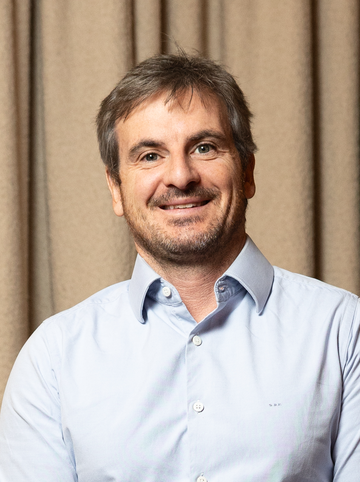
 Silvio Frison Co-Founder & CEO
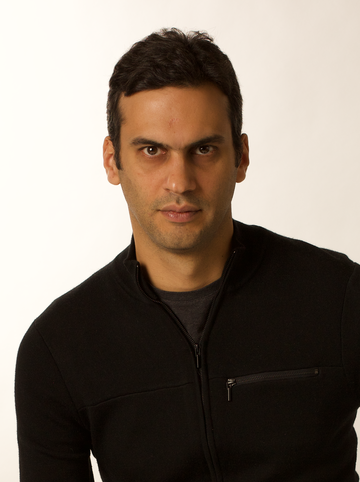
 Ricardo Sales Co-Founder
Advisory Board
The biggest names in healthcare and artificial intelligence. On the same board.
-
Managing director of Einstein, Henrique Neves has led the institution since the mid-2000s. Before that, he held executive positions at Shell, Brasil Telecom and Varig, combining experience at large corporations with healthcare management.
-
A Brazilian technology executive and the current Chief Product Officer at Docker, in Silicon Valley. He spent 15 years at Microsoft, led initiatives at Google DeepMind and worked at Meta on product strategy and artificial intelligence APIs, also in California.
-
A surgeon with a doctorate from the University of São Paulo, Paulo Chapchap led Hospital Sírio-Libanês and is a reference in liver transplantation. He is currently medical director of IEPS and chairs the board of Instituto Todos pela Saúde.
-
An entrepreneur and software engineer, River Mist was a tech lead at Pinterest and co-founded Weights, a generative AI platform for multimodal creation. After the company was acquired by OpenAI in 2026, he joined OpenAI.
-
A radiologist and healthcare executive, José Marcelo de Oliveira, known as Jota, has been CEO of Hospital Alemão Oswaldo Cruz since 2021. He previously led A.C.Camargo Cancer Center and built a long career at Grupo Fleury.
-
A physician trained at the University of São Paulo with a PhD in Medical Informatics, Teresa Sacchetta works at the intersection of healthcare, data and technology. She was CIO of Grupo Fleury and worked at UnitedHealth and Sírio-Libanês. She is currently Vice President of the Conselho Saúde Digital Brasil.
-
An executive with decades of experience in healthcare, Luiz De Luca was CEO of Hospital 9 de Julho and General Director of Hospital Samaritano. He now serves as a board member and advisor, focused on healthcare management, governance and investment.
-
A radiologist, executive and researcher, Gustavo Meirelles is Afya’s VP of Medical and Institutional Relations and president of Instituto Afya. He works in healthcare innovation, medical education and artificial intelligence applied to medicine.
-
Senior partner and founder of Vila Nova, Fernando Carneiro has more than 25 years in executive search. He has led countless searches for CEOs, board members and C-level executives, and previously served as Executive Director of two financial institutions, as a board member of several companies and as Executive Director at Febraban.
/ 9
Investors
Who is betting on us
Valor Capital, Monashees, Positive Ventures and Endeavor led the two rounds, which total more than US$20 million raised.





Join us
We are selecting visionary hospitals that want to redefine their management and lead the sector over the next ten years.
If your hospital serves a significant volume of health plan patients and you already know you are losing revenue without being able to say exactly where, the conversation starts with a diagnostic. No commitment and no cost.
Apply now