Blog/ Healthcare technology

All about HME, HMEF and HEPA respiratory filters
Learn the differences between these essential devices for microbiological protection and humidity maintenance in mechanically ventilated patients, preventing contamination of the environment and of hospital equipment

- By
- Rivio, Editorial team
- Published
- Reading time
- 2 minutes


Anyone who works in healthcare has certainly come across HME, HMEF and HEPA filters. But what exactly are they, and why do they show up so often on hospital claims?
Since the COVID-19 pandemic, the importance of mechanical ventilators has become clear to the entire population. They are essential in treating patients with breathing difficulties.
The increased demand for ventilatory support came with intensive use of associated supplies, including respiratory filters. In the ventilatory management of intubated patients, attention to the correct use of these devices is essential, because the lung is the organ most affected by respiratory diseases.
In general, respiratory filters prevent the spread of pathogens transmitted by droplets and aerosols in mechanically ventilated patients. They also help maintain the integrity of the respiratory system and protect the ventilator itself against contamination.
Types of respiratory filters
The main respiratory filters are:
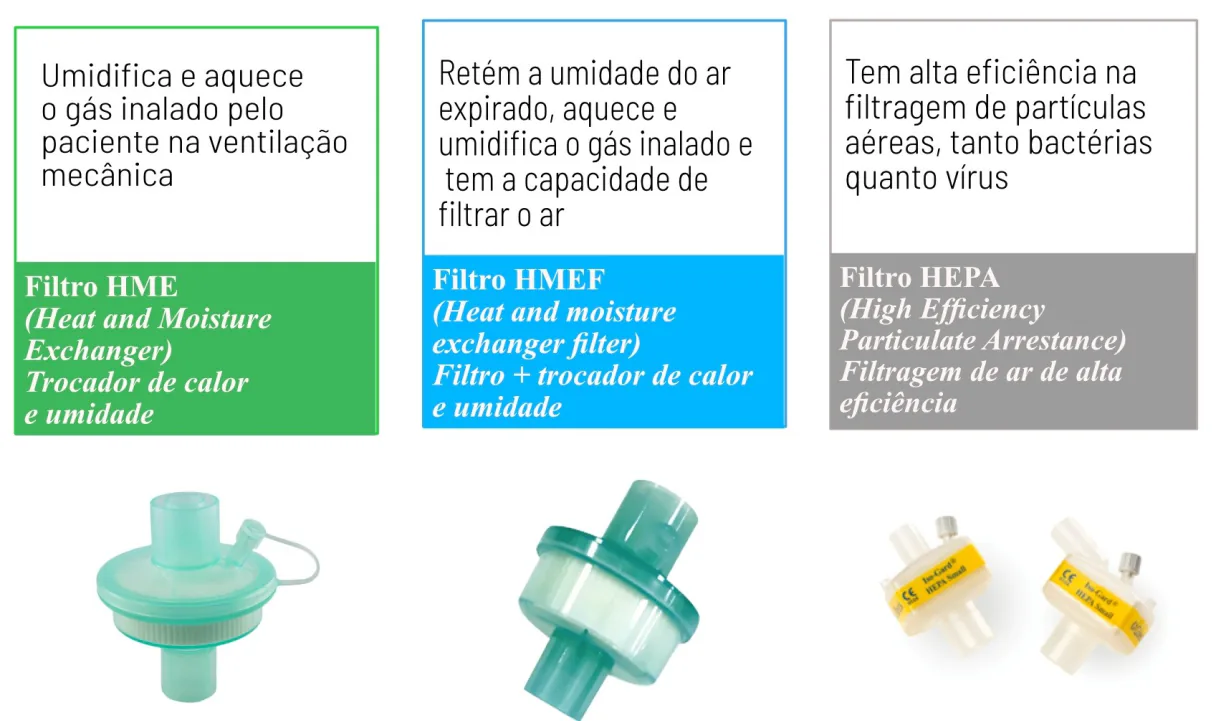
HME filter (Heat and Moisture Exchanger)
The HME warms and humidifies the inspired gas, compensating for the loss of heat and moisture caused by intubation. When the device has no integrated microbiological barrier, a HEPA filter must be used on the expiratory limb for additional protection.
HMEF filter (Heat and Moisture Exchanger Filter)
The HMEF combines two functions: heat and moisture exchange and a microbiological barrier. That is why it does away with the need for an additional HEPA filter on the expiratory limb in most clinical situations.
HEPA filter (High Efficiency Particulate Air), or high‑efficiency filter
The HEPA filter has a high capacity to retain airborne particles, including bacteria and viruses. Its efficiency can reach 99.9%, which is why it is essential to prevent contamination of the mechanical ventilator and the environment.
Use of filters in COVID‑19 patients
In COVID-19 patients, the most common practice is to use an HME filter between the endotracheal tube or tracheostomy and the breathing circuit, combined with a HEPA filter on the expiratory limb, close to the mechanical ventilator.
This arrangement reduces the risk of viral spread and protects the equipment. However, the setup may vary according to institutional protocols, the patient’s clinical characteristics or the availability of devices.