Blog/ Healthcare technology

Medicine and AI: more technology, more humanity
Artificial intelligence and the new generation of physicians: an inevitable transformation
- By
- Gustavo MeirellesVice President of Medical Affairs and Institutional Relations at Afya, founder of Comunidade Inovação em Saúde (CIS), host of ExpertCast and Rivio advisor.
- Published
- Reading time
- 3 minutes


Article originally published in MIT Sloan Management Review on 03/25/26.
In ten years, between 2014 and 2024, the number of places in medical schools in Brazil grew 139%, according to the Higher Education Census. This quantitative expansion came with a profound change, one I have been reflecting on while taking part in talks, debates and conversations with fellow physicians, students, entrepreneurs, executives and journalists: the transformation of the student profile and, consequently, of the future of medical practice.
A generation that sees medicine beyond the doctor’s office, strongly focused on innovation, management and technology, was already taking shape. The image of the white coat and the stethoscope no longer represents the whole profession. New medical students have also started learning to be hospital managers, researchers, solution developers and clinical engineering specialists, among other roles. With the arrival of AI, this change has become even deeper and more necessary.
Medicine has definitively stopped being only a field of care and become a complex, multidisciplinary and technological ecosystem. Artificial intelligence, once more present in research, is now part of the care routine and needs to take on its role in medical education as well.
The question is no longer whether it will be part of medicine, but how it will be incorporated in a responsible and structured way. Use is intense among students and professionals. Tools based on widely available generative models are used for reviewing content, organizing studies and supporting decision-making. In care practice, algorithms already help analyze imaging tests, predict clinical risk, triage patients and organize evidence‑based protocols.
However, it is essential to understand its limits and to have the human intelligence to use these tools in the service of the patient. Our physician’s oath, based on the Hippocratic one, remains a solemn commitment to ethics and humanity, modernized in the Declaration of Geneva to reaffirm principles such as prioritizing the patient’s health and autonomy and practicing medicine with conscience and dignity.
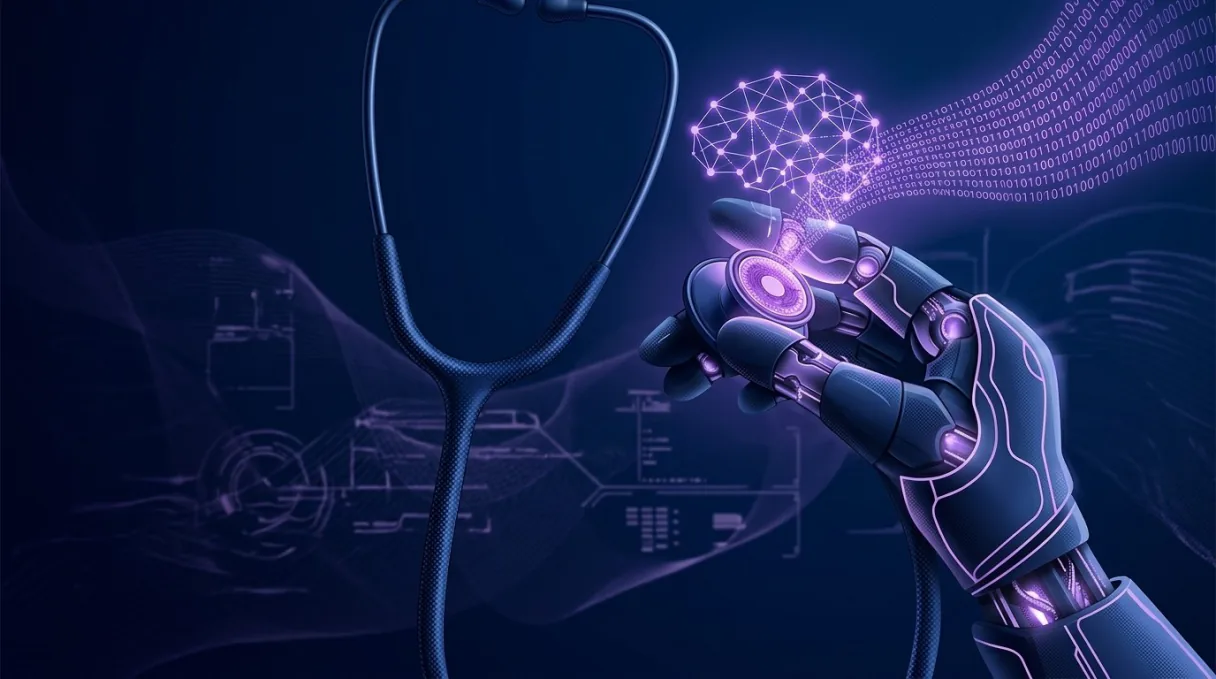
Artificial intelligence does not replace clinical reasoning, but it expands analytical capacity. It helps interpret tests, systematize protocols and keep up with science. The physician’s role becomes even more strategic: critically interpreting information, validating evidence and integrating technology with clinical judgment and human sensitivity.
That is why I advocate the use of solutions developed specifically for the healthcare environment, such as Whitebook Assist, a conversational tool created with a clinical focus and protection of sensitive information, as well as Open Evidence, a world-leading solution in health information, among the many good solutions available on the market. The difference lies not only in the technology, but in the purpose and in an architecture geared toward patient safety.
I also notice that artificial intelligence is already influencing career choices. Radiology, which for years was among the most sought-after specialties, is now avoided by some students who fear automation. I can say, from my own experience, that AI will not eliminate the radiologist. It is redefining the role, making it even more analytical and more relevant in clinical decision‑making.
At the same time, specialties such as psychiatry and pediatrics have gained ground. The rise in mental disorders and the growing value placed on comprehensive care reinforce the centrality of the human dimension of medicine, precisely what no technology can replace.
The new generation of physicians already combines three pillars: a humanist outlook, an entrepreneurial mindset and technological fluency. Artificial intelligence is not a threat to medicine, but a tool that requires preparation, ethics and responsibility. Training physicians for this new scenario means integrating science, technology and humanism intentionally.
The medicine of the future is already here and will, without a doubt, become increasingly digital. And to expand its value and generate more benefits for everyone, it will need to become increasingly human.
________________________________
Gustavo Meirelles is Medical Vice President at Afya, founder of the Comunidade Inovação em Saúde, an investor and a startup board advisor. A radiologist, he completed his specialization, doctorate and postdoctoral studies in Brazil and abroad. He has experience as an executive at large healthcare companies, holds an MBA in business management and is an advisor to Rivio. Official website: http://www.gustavomeirelles.com