Blog/ About us

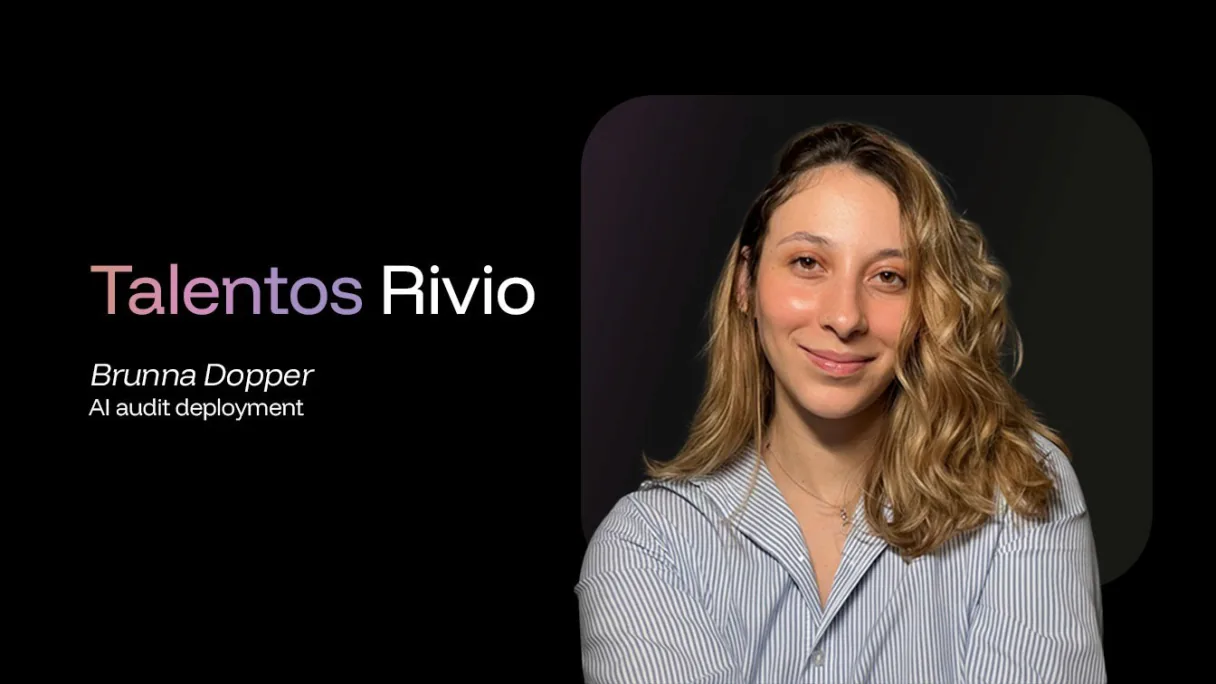
Rivio Talent: Brunna Dopper, AI audit deployment
Born in the city of São Paulo to a father from Rio Grande do Sul and a mother from Minas Gerais, Brunna Dopper is a nurse auditor and deployment analyst.
- By
- Ricardo StefanelliJournalist, communications specialist and Head of Content in Marketing at Rivio
- Published
- Reading time
- 8 minutes
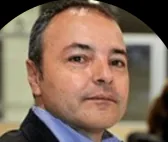


Born in the city of São Paulo to a father from Rio Grande do Sul and a mother from Minas Gerais, Brunna Dopper is a nurse auditor and deployment analyst. Specialized in Intensive Care and holding an MBA in Health Services Management and Auditing, she built a solid foundation in patient care across several departments of some of the country’s leading hospitals, such as Israelita Albert Einstein and Rede D’Or São Luiz.
Before joining Rivio, where she works on deploying the platform that automates part of the revenue cycle at hospitals, Brunna followed a remarkable path of study and learning. Her academic journey began in the Nursing program at Universidade Anhembi Morumbi, where she was soon invited to be class leader and to develop leadership skills through SOAP, a strategic communication school partnered with the university.
Always eager to broaden her training and understand different areas of healthcare, she took part in academic leagues in Intensive Care, Emergency Care and Public Health. At just 19, she founded and chaired the Mental Health League, a group that addresses psychological and emotional well-being for the nursing students themselves.
In 2022, Brunna entered the world of technical publications when her article on exogenous poisoning in children was published in the journal Núcleo do Conhecimento. That same year, she joined the graduate program in Intensive Care at Faculdade Israelita de Ciências da Saúde Albert Einstein as a scholarship student.
Brunna worked for a year in the Step-Down/ICU unit, during which she proposed an improvement to standardize how shift handoffs were recorded in the system. Management embraced the suggestion, implemented it in the unit, and it helped the unit earn recognition for the best structured shift handoff in the hospital.
After completing the scholarship program, Brunna Dopper was invited back as a hospitalist nurse, providing coverage across different areas of the hospital for almost a year and a half. This experience broadened her exposure to patients of different age groups and levels of complexity.
In March 2025, she began an MBA in Health Services Management and Auditing, and in August of the same year she took on the role of nurse auditor at Rede D’Or São Luiz, spending three months on the pre-review of medical claims, until she was invited in November 2025 to join the Rivio team in AI audit deployment, an area she identifies with because it combines process improvement and innovation supported by AI.
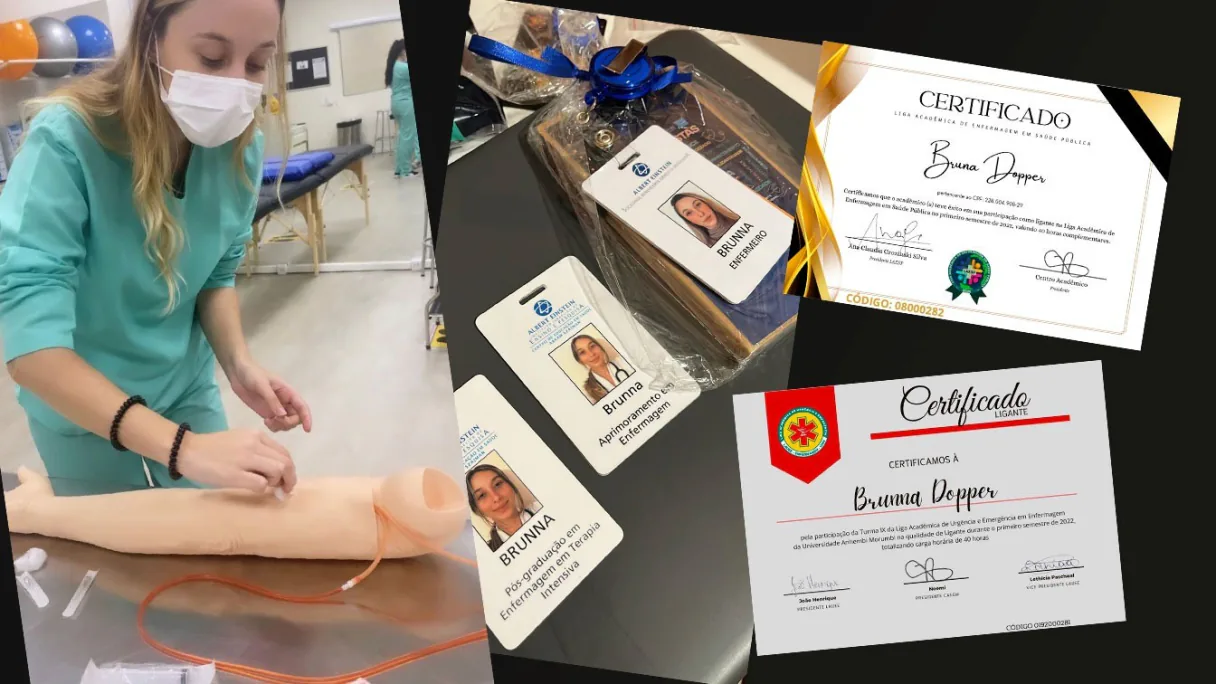
A path through the country’s leading hospitals and continuous training mark Brunna’s professional journey
___________________________________________
What does an AI audit deployment specialist do at Rivio?
I visit clients to lead end-to-end deployment after mapping and designing each hospital’s specific revenue cycle flow and structuring rules based on the real process. I turn these flows and criteria into algorithms so that the system automates most claims with minimal human intervention, increasing standardization, traceability and efficiency.
And why did you choose to come to Rivio when you already had a good job at a large, well‑known hospital?
Getting to know Rivio was a very natural alignment between what I understand as purpose and my professional path. While still in the first semester of my MBA, I worked on an academic project in which I had to structure a company related to the subject of the program, and the project I developed was very similar to what Rivio does today.
Are you managing to do what you imagined?
Yes. Since I joined Rivio, I have had no doubt that I was facing an opportunity consistent with what I believe in, which is using technology to make processes more efficient, safe and sustainable, especially in the healthcare revenue cycle. I have a strong interest in innovation and applied technology, and my experience in a highly technological environment only reinforced that direction.
Did you find the environment you imagined at Rivio?
I found the environment and the challenge I expected, automating complex processes, aware of the impact of this optimization on healthcare institutions. It is an environment that turns ambitious goals into deliverables. And that motivates and drives me.
In a career as short as it is brilliant, what do you think sets you apart?
What sets me apart is translating complexity into processes and rules. I am specializing in organizing, standardizing, reducing rework and increasing consistency without losing the clinical perspective and the safety of both care and claim billing.
How do you see the technology culture at Rivio, and how much can it change auditing at Brazilian hospitals?
I see the company as having a high-tech culture, focused on results and connected to needs of the healthcare system that, until now, few people were paying attention to. Innovation here is not just talk; it translates into solutions that respect hospitals’ care, regulatory and operational context. In hospital auditing, technology — especially artificial intelligence — has the potential to drive significant progress.
Please give a few examples of this progress.
I see at least four examples.
Greater consistency and standardization of reviews, which increases the reliability of the process.
Another: efficiency gains in repetitive tasks let the auditor direct time and energy to what requires technical judgment and clinical insight. In other words, the auditor can be more strategic and less operational.
Another advance: the traceability and transparency of the reasoning and evidence make justifications, technical discussions and denial appeal processes easier.
And finally, identifying patterns and risks that, given the day-to-day volume of information, may be less visible without the support of technology.
You have no doubt at all that AI has come to help nursing roles.
I see AI as a resource that only strengthens the auditor’s work, expanding their analytical capacity and making auditing more strategic, with a focus on quality and patient safety. And financial sustainability for the hospital.
Have you had any memorable moments at Rivio?
I consider routine moments the memorable ones. I value the daily interaction, the closeness and integration between leadership, management and operations. It may seem like little, but that closeness is everything. At lunches and informal moments, for example, being alongside the founders and top leaders reinforces traits I consider very strong at Rivio, such as accessibility, the ability to listen and a collaborative spirit among teams from different areas.
Why do these traits end up being relevant to you?
For someone coming from larger institutions with more hierarchical structures, as I do, this format is especially meaningful. It shows that there is room to contribute, to propose improvements and to discuss ideas in depth with a common goal, which is to make the product evolve and have a real impact on the lives of hospitals and patients. That increases the whole team’s sense of belonging and responsibility. And it has been a highlight for me.
In your opinion, what makes a good fit for Rivio’s AI audit team?
I believe a good fit brings together three main points.
First, I see great value in a solid technical foundation in healthcare auditing, with an understanding of claims, care records, criteria, compliance, hospital flows and so on.
I also think the professional must have an analytical profile and be open to technology. In other words, they need to feel comfortable working with data and be willing to test and adjust processes. Oh! And be interested in deepening their knowledge of applied AI.
Finally, I would highlight a collaborative attitude and a sense of responsibility, with clear and ethical communication. I value colleagues’ ability to discuss rules in depth and their understanding that the decisions we make can affect internal and external teams and major institutions, and be reflected in the care and financial results of the hospitals that are our clients.
Diving is one of your hobbies, right? Does this sport teach you anything or show up in your professional attitude or day‑to‑day practice?
Contact with nature is how I recharge. When we learn to dive, whether snorkeling or with a tank, we learn to observe. And that is very important: knowing how to observe the environment, how animals behave, how they live in that ecosystem. It is as if my mind stopped all its thoughts and I unplugged from the 220 volts of our daily rush, where we are often so much on autopilot that we have no time to observe. It is a practice in which you tend to pay more attention, whether to your breathing, your equipment or what is around you. I like to bring that into my professional and personal life, because sometimes we cannot solve a problem or a request simply because we do not stop to think. When we stop to think and observe what is causing the problem, reaching the solution becomes easier.
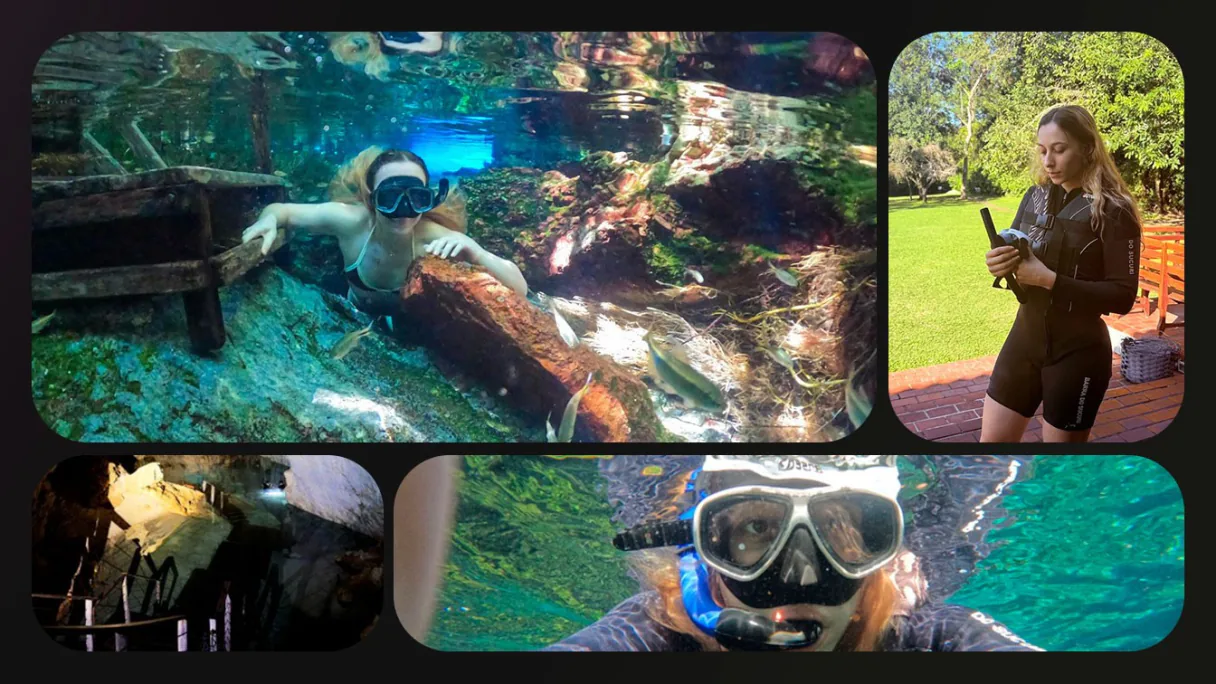
Diving helps Brunna stop and reflect: “observing the cause of a problem helps solve it”
Come live great moments at Rivio
We are bringing together people who dream big, who want to do what has never been done and intend to leave a legacy. We value execution with speed and excellence, and continuous learning.
Talent and courage, together, tend to change the course of humanity. By making hospital management smoother and more efficient, we help save lives. That is changing humanity too.
Working at Rivio means being surrounded by people with a sense of purpose in their careers and professional ambition, people eager to grow and make history.
Our offices are in São Paulo, near Avenida Paulista, and in Blumenau (Santa Catarina), one of Brazil’s leading technology hubs.
If you want a mission in the form of a job, join us.