Blog/ Healthcare technology

AI use in hospitals is informal in 91% of cases
A survey by Instituto Opinion Box, in partnership with Rivio, shows that the use of artificial intelligence in hospitals is still poorly integrated into the institutions’ formal management processes
- By
- Felipe SchepersDirector of Operations at Instituto Opinion Box and professor at Centro Universitário Una, in Minas Gerais
- Published
- Reading time
- 5 minutes



Key findings of the survey on AI use in hospitals
A January 2026 survey by Instituto Opinion Box reinforces the need to structure the use of AI in hospital operations management. Here are the study’s main insights:
- More than 70% of healthcare professionals say they use artificial intelligence to some extent at the hospital, but the use is ad hoc or experimental.
- The advance of artificial intelligence in Brazilian medicine and hospitals’ willingness to use AI are not yet officially reflected in the institutions’ operations management.
- Only 9% of the healthcare professionals surveyed work at institutions that have adopted AI officially, and 13% work at hospitals where AI is integrated into other processes.
- Lack of culture and training is seen as the main reason AI use is still informal.
- 80% of the professionals surveyed are interested in using AI officially at work.
- Only 32% of hospital institutions use AI in billing management, according to respondents.
Adoption of AI tools in hospitals: the current landscape
Even though hospitals make tools based on artificial intelligence available and healthcare professionals are highly interested in them, only 9% work at institutions that officially adopt these technologies in their management processes. And only 13% see their use as integrated into the institution’s official processes.
These figures stand out in a survey produced by Instituto Opinion Box in partnership with Rivio, and they reveal a mismatch between the potential of AI and its effective, structured adoption in the sector.
This “implementation gap” is seen worldwide: a report released by Philips highlights that healthcare leaders are now focusing on transparency and ethics so that AI is accepted as a trusted partner in clinical and administrative decisions.
The Opinion Box survey shows that the challenge is no longer access to technology, but its structured integration into the institutions’ critical processes. Although more than 70% of respondents say they use artificial intelligence tools to some extent, much of that use is still experimental, ad hoc and not integrated.
The newspaper O Globo covered the survey and interviewed CTO Matheus Losi in a report published on March 18, 2026.
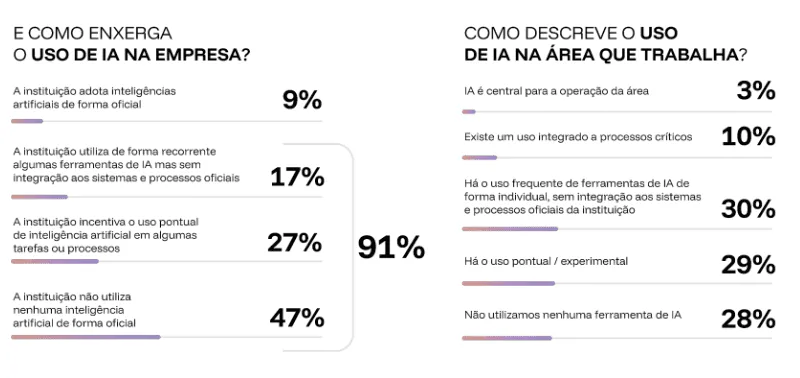
Figure 1: How professionals see and describe AI use at their company
Culture and lack of training: the main barriers
When asked, employees who do not use AI in their areas believe the main barriers to the official adoption of these tools are related to cultural factors and lack of training: 20% of respondents attribute the informal use to the absence of an organizational culture, 18% to unfamiliarity with the tools and 15% to a lack of skills development or team training.
These human barriers are borne out by the Hospital Digital Maturity Map by Anahp (National Association of Private Hospitals), which records a maturity level of just 49%, suggesting that technology is advancing faster than institutions’ ability to prepare their teams.
Only 12% believe the obstacle is cost. The issue, therefore, is one of governance. For the respondents of the Opinion Box survey, without specific training, AI use tends to be ad hoc and unable to drive real change.
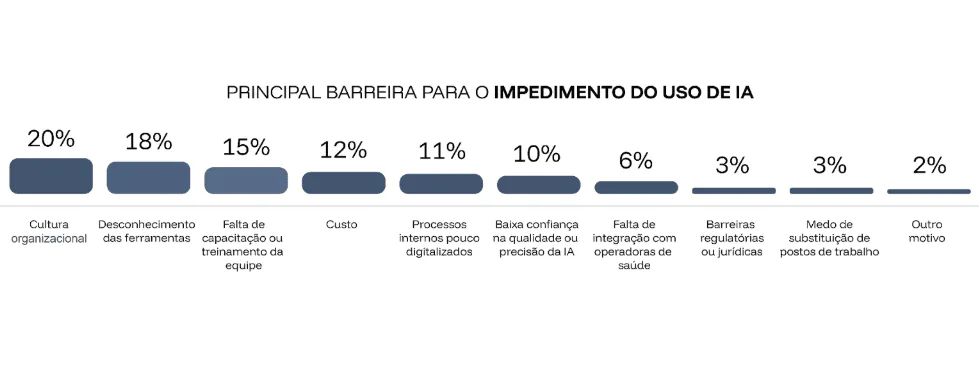
Figure 2: Main barrier to AI use at institutions, according to professionals
AI is more common in patient-facing services than in hospital management
The survey, which heard from 349 professionals in the health, hospital and wellness sectors across the country, also shows that AI adoption is still largely at an early stage.
Among the institutions that already use the technology, 47% apply it to “front-line activities,” such as appointment scheduling, indicator monitoring, 24-hour support for questions and queue management. But only 32% apply AI with a focus on management.
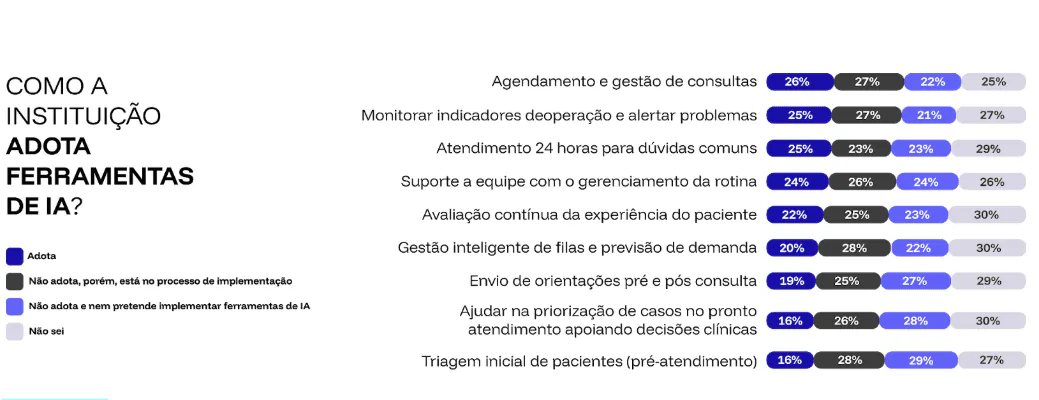
Figure 3: 47% use AI for at least one of the front‑line purposes
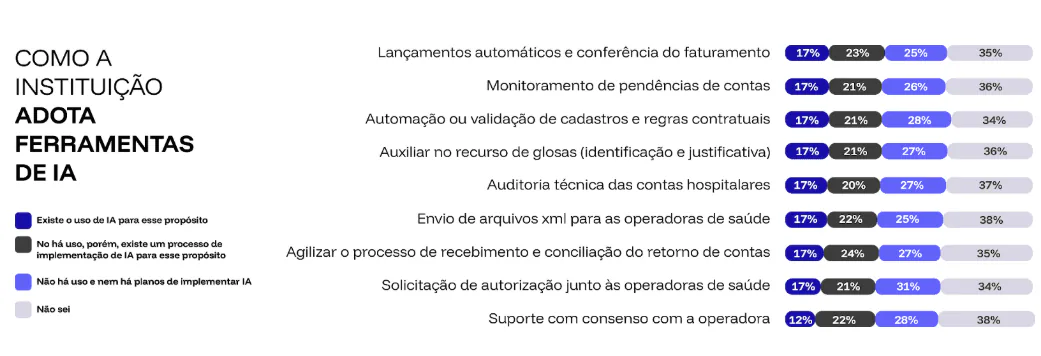
Figure 4: 32% use AI for at least one of the management purposes above
Changes that could directly affect hospital cash flow
Although artificial intelligence is an indispensable topic, teams are keen to adopt it and the tools are available, turning that use into a process that fits the reality of hospital management is still a challenge, as the survey shows: only 17% use the technology in billing, precisely one of the most critical processes for the institutions’ financial sustainability.
According to Anahp, R$ 5.8 billion of hospital revenue is withheld by payers, which cite administrative errors, communication failures, improperly completed care records and inconsistencies in procedure coding, processes in which artificial intelligence would be extremely useful.
“There is a big opportunity for artificial intelligence to have a real impact when it stops being an isolated tool and becomes part of the hospital’s critical processes. For that, making technology available is not enough. It takes a structural change and a shift in priorities within the institution, bringing care and finance professionals (such as nurses, managers and billing specialists) together with engineers and technology specialists to develop solutions that make sense for the operation,” says Bruno Brasil, Head of Operations at Rivio.
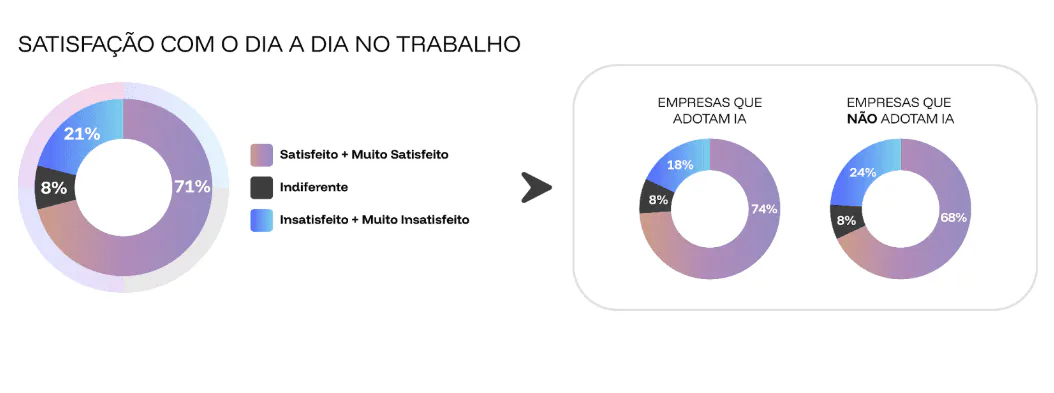
Figure 5: Satisfaction with day-to-day work at companies that do and do not adopt AI
Finally, the strong interest in using AI stands out. Whether in patient care or in operations management, the professionals surveyed have no doubt that AI solutions are essential for the healthcare sector to move forward.
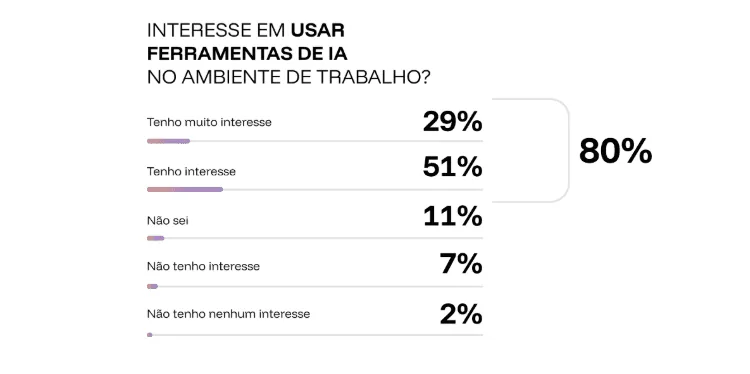
Figure 6: Professionals’ interest in using AI tools at work
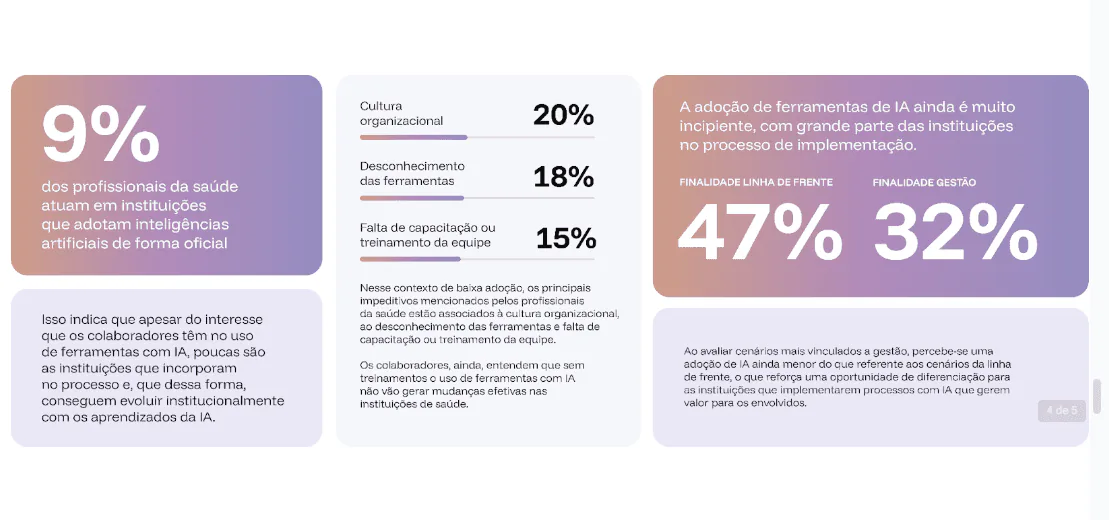
Figure 7: Key insights from the survey
To read the full survey, click this link.
_____________________________
Felipe Schepers is a marketing and business administration professional, co-founder and Director of Operations of Instituto Opinion Box, and a professor at Centro Universitário Una, in Minas Gerais